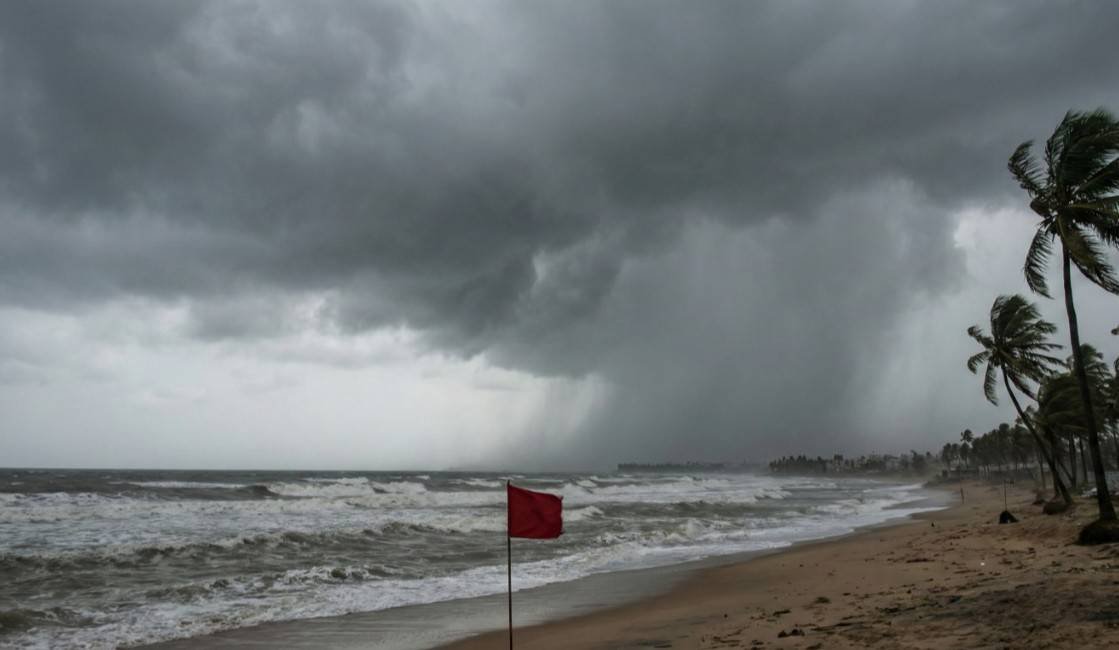
Cyclone Ditwah Alert: IMD Predicts Heavy Rain for Andhra Pradesh
The Bay of Bengal is once again the center of meteorological attention as Cyclone Ditwah gathers strength. For residents of Andhra Pradesh and Tamil Nadu, staying informed isn’t just about checking the weather app—it’s about safety and preparedness.
According to the latest bulletin from the India Meteorological Department (IMD), the cyclone is currently positioned over the southwest Bay of Bengal and is poised to bring significant rainfall and squally winds to the coast.
In this comprehensive guide, we will break down the current trajectory of Cyclone Ditwah, the specific rainfall warnings for Andhra Pradesh districts, government preparedness measures, and crucial safety tips to keep you and your family safe.
1. Current Status: Where is Cyclone Ditwah Now?
As of the latest update, the system has shown a distinct northward movement over the past six hours. It is currently centered at:
- Latitude: 11.4°N
- Longitude: 80.6°E
To put this in perspective, the system is hovering very close to the north Tamil Nadu and Puducherry coasts. Unlike some cyclones that make immediate landfall, the IMD forecasts that Cyclone Ditwah will continue to move along and off the coastline. It is expected to remain approximately 30 to 70 km offshore.
While a direct landfall isn’t always necessary for severe impact, this proximity to the land is sufficient to drag heavy moisture bands over the region, resulting in intense weather conditions.
The “Ditwah” Moniker
You might be wondering about the name. Following the standard protocol for naming cyclones in the Indian Ocean region, the name ‘Ditwah’ was suggested by Yemen.
Did You Know? The name likely refers to the Detwah Lagoon, a stunning, large saline lagoon located on the northwest coast of Socotra, Yemen. It is a UNESCO World Heritage site known for its pristine beauty—a stark contrast to the turbulent weather system currently bearing its name.
2. Impact Forecast: District-wise Rainfall Warnings
The primary concern with Cyclone Ditwah is not just the wind, but the sheer volume of water it is expected to dump over the coastal regions. The IMD has issued specific warnings for different parts of Andhra Pradesh.
South Coastal Andhra Pradesh (SCAP)
- Risk Level: High
- Forecast: This region is expected to bear the brunt of the system. Residents should expect heavy to very heavy rainfall at several places.
- Extreme Alert: The IMD has warned that extremely heavy rain is likely at one or two isolated locations throughout the day.
- Wind Speed: Squally winds ranging from 50-60 kmph, gusting up to 70 kmph.
Rayalaseema Region
- Risk Level: Moderate to High
- Forecast: Rainfall activity will be widespread. Most places will receive light to moderate rain.
- Heavy Rain Alert: Similar to the coast, heavy to very heavy rain is predicted at isolated spots.
- Thunderstorm Warning: Be prepared for thunderstorms accompanied by dangerous lightning strikes.
North Coastal Andhra Pradesh (NCAP) & Yanam
- Risk Level: Moderate
- Forecast: The impact here will be slightly less intense compared to the south coast, but caution is still required. Expect light to moderate rain.
- Wind Speed: Gusty winds of 35-45 kmph, reaching up to 55 kmph.
Timeline:
- Monday: Heavy rainfall peaks in isolated places.
- Tuesday: The system is expected to weaken slightly, resulting in light to moderate rainfall or thundershowers across the affected regions.
3. Government Action and Preparedness
The Andhra Pradesh government is not taking any chances. Recognizing the potential severity of Cyclone Ditwah, Home Minister V. Anita has taken charge of the situation, conducting high-level reviews from the Secretariat in Guntur district.
Districts on High Alert
Specific focus has been placed on the following districts, which are most vulnerable to the cyclone’s path:
- Nellore
- Tirupati
- Kadapa
- Chittoor
- Annamayya
Directives to Officials
The Home Minister has issued a 48-hour high alert for these regions. The administration’s strategy focuses on:
- Communication: Ensuring warnings reach “vulnerable habitations”—remote villages and low-lying areas that are often cut off during storms.
- Rapid Response: Teams have been deployed to immediately clear fallen trees and restore power supply to prevent long-term outages.
- Control Rooms: Officials have been directed to respond promptly to all distress calls received by district control rooms.
- Evacuation Readiness: District Collectors have confirmed that rehabilitation centers are prepped and ready to accommodate evacuees should the water levels rise dangerously.
4. Understanding Cyclones in the Bay of Bengal
Why does this keep happening? The Bay of Bengal is historically a hotbed for cyclonic activity.
The distinct funnel shape of the bay concentrates energy, and the warm sea surface temperatures (often above 26.5°C) act as fuel for these systems. When a low-pressure area forms—like the one that birthed Ditwah—the warm air rises, condenses, and forms massive clouds. As the Earth spins, these clouds begin to rotate, forming the cyclone.
The “Recurving” Phenomenon: Ditwah is moving “along and off” the coast. In meteorological terms, this can sometimes be more dangerous than a direct hit because the system stays over the water longer, gathering moisture and dumping it continuously over the land as it scrapes past.
5. Comprehensive Safety Guide: How to Protect Your Family
While the government does its part, personal preparedness is the key to survival. Here is a checklist to navigate the next 48 hours.
Before the Storm Intensifies
- Secure Your Home: Loose objects on your roof or balcony (flower pots, tin sheets) can become deadly projectiles in 70 kmph winds. Secure them immediately.
- Charge Everything: Power outages are almost guaranteed. Charge your phones, power banks, and rechargeable emergency lights.
- Stock Up: Ensure you have enough non-perishable food (biscuits, dry fruits, canned goods) and water for at least three days.
- Document Safety: Keep your important documents (ID, insurance, property papers) in a waterproof bag on a high shelf.
During the Cyclone
- Stay Indoors: This cannot be stressed enough. Do not go out to “see the waves” or check the weather.
- Avoid Glass: Stay away from windows and glass doors. If the wind picks up, draw the curtains to prevent glass from shattering inward.
- Electrical Safety: If you see sparks or suspect a short circuit, turn off the main power switch immediately. Unplug expensive electronics to protect them from voltage surges.
- Gas Safety: Keep the gas regulator switched off when not cooking.
Flood Precautions
Given the heavy rainfall warning for Nellore and Tirupati, flash floods are a real risk.
- If water starts entering your home, move to a higher floor or a tabletop.
- Do not walk through floodwaters. It takes only six inches of fast-moving water to knock an adult off their feet.
- Be wary of snakes and insects that seek higher ground during floods.
6. Post-Cyclone Recovery
Once the IMD declares the “All Clear,” the danger isn’t necessarily over.
- Watch Your Step: Debris, broken glass, and nails will be everywhere. Wear sturdy shoes.
- Boil Water: Floodwaters often contaminate local water sources. Boil drinking water for at least 20 minutes before consumption to prevent cholera and typhoid.
- Report Hazards: If you see downed power lines, do not touch them. Report them to the electricity department immediately.
7. Conclusion
Cyclone Ditwah is a reminder of nature’s unpredictability. While the system is moving parallel to the coast, the threat of heavy rainfall and gusty winds in Andhra Pradesh—particularly in the SCAP and Rayalaseema regions—is significant.
The administration is on alert, and the rehabilitation centers are ready. Now, it is up to us to remain vigilant. Keep an eye on official updates from the IMD, listen to local authorities, and prioritize safety over everything else.
Stay safe, Andhra Pradesh.
Key Takeaways
- Cyclone Ditwah is moving north along the TN-AP coast.
- Heavy to Extremely Heavy Rainfall is expected in South Coastal AP and Rayalaseema.
- Wind Speeds may reach up to 70 kmph.
- Helplines: Keep your local district control room numbers handy.
If you found this update helpful, please share it with friends and family in the affected districts. Staying informed is the first step to staying safe.
Read more here
- How to Book Urea & Fertilizers in the Framework for Fertilizer Sale (FFS) App: Step-by-Step Guide
- Framework for Fertilizer Sale (FFS): Telangana’s New Centralized Fertilizer App
- Fertilizer Booking App: Mistakenly Entered Less Crop Area? Here’s What Farmers Need to Know
- Monsoon 2026: Best Crops for Farmers as IMD Predicts Weak Rainfall
- Digital India: Identify Your Land Survey Number Instantly Using Your Smartphone