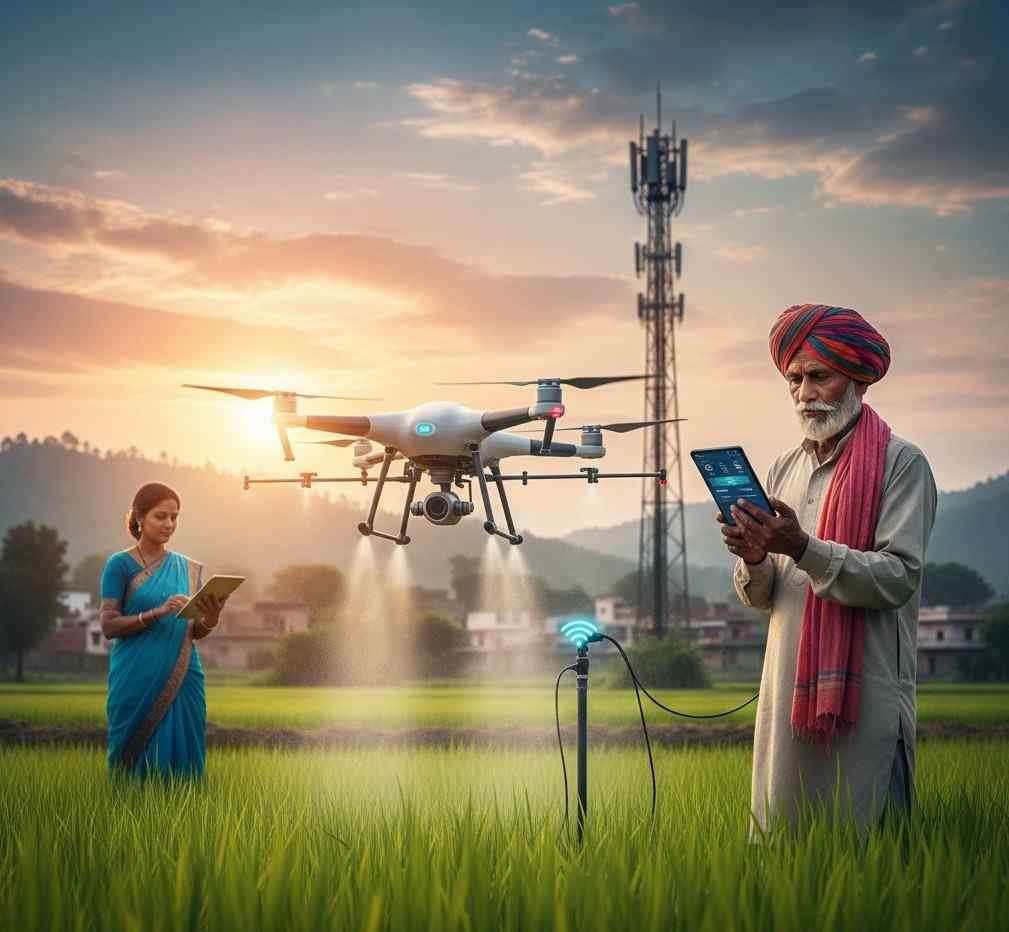
In the heart of rural India, a revolution is brewing. But it’s not the steam-and-iron revolution of the past; it’s a silent, digital transformation powered by Artificial Intelligence (AI). From the sugarcane fields of Uttar Pradesh to the chili farms of Telangana, Indian farmers are no longer just looking at the clouds for answers—they are looking at their smartphones.
The integration of AI in farming is moving from experimental labs to actual soil. With India’s agricultural sector contributing nearly 16% to the GDP and employing almost half of its workforce, the stakes for modernization are incredibly high. In this comprehensive guide, we explore how AI in Indian farming is changing the game, the startups leading the charge, and why this technology is the key to a sustainable future.
The Landscape of AI in Indian Farming
By the end of 2025, the use of AI in Indian agriculture has transitioned from “flashy automation” to “human-centered intelligence.” While autonomous tractors are still a rarity on small plots, vernacular AI chatbots, satellite-driven analytics, and low-cost drones have become the new essentials for the modern Indian kisan.
Why India Needs AI Now
India’s agriculture faces a “triple threat”:
- Climate Volatility: Erratic monsoons and heatwaves are the new normal.
- Resource Scarcity: Groundwater levels are plummeting in states like Punjab and Haryana.
- Labor Shortage: Rural-to-urban migration has made manual weeding and harvesting expensive and difficult.
How Indian Farmers Are Using AI Today
The application of AI in Indian farming isn’t a one-size-fits-all solution. It’s being deployed across the entire value chain, from seed selection to selling the final produce.
1. Precision Sowing and Weather Alerts
The AI Sowing App, developed by Microsoft in collaboration with ICRISAT, is a prime example. By analyzing 30 years of historical weather data and real-time moisture levels, the app sends a simple SMS to farmers telling them the exact day to sow their seeds.
- The Result: Farmers using this tech have seen a 10–30% increase in yields without spending a Rupee more on seeds or fertilizer.
2. AI-Powered Pest and Disease Detection
For decades, a pest attack meant total crop failure. Today, apps like Plantix act as a “digital doctor.” A farmer takes a photo of a diseased leaf, and the AI identifies the pest with over 95% accuracy, recommending the exact organic or chemical treatment needed in their local language.
- Impact: This reduces the indiscriminate use of expensive pesticides, saving costs and protecting the environment.
3. Drones and Satellite Monitoring
Drones are no longer just for photography. In 2025, thousands of drones are flying over Indian fields to:
- Spray Pesticides: Targeted spraying that uses 90% less water and 30-40% less chemical.
- Map Soil Health: Sensors identify which part of the field needs more Nitrogen, Phosphorus, or Potassium (NPK).
4. Smart Irrigation with IoT
Startups like Fasal use AI-driven sensors buried in the soil. These sensors communicate with the farmer’s phone, telling them exactly when to turn on the pump and for how long.
- Case Study: Farmers in Maharashtra have reported saving up to 3 million liters of water per season using these automated systems.
The Rise of Indian Agri-Tech Startups
The backbone of AI in Indian farming is the vibrant startup ecosystem. These companies are tailoring global technology to fit the unique needs of Indian smallholders.
| Startup | Key AI Technology | Core Benefit |
|---|---|---|
| Cropin | Satellite Imagery & Big Data | Predicts yield and monitors crop health at scale. |
| AgNext | Computer Vision | Instant quality grading of crops (tea, grains) for better market prices. |
| KissanAI | Generative AI (Chatbots) | Multilingual voice-based assistance for illiterate farmers. |
| DeHaat | Predictive Analytics | Full-stack support from seed to market linkage. |
| Ninjacart | Machine Learning | Optimizes the supply chain to reduce food wastage. |
Government Initiatives: Driving Adoption
The Indian government has recognized that AI in Indian farming is critical for doubling farmer income. Key initiatives in 2025 include:
- Kisan e-Mitra: An AI-powered chatbot that answers queries about the PM-Kisan scheme and crop insurance in 11 regional languages.
- Digital Agriculture Mission: A massive project to create “AgriStack”—a digital ID for every farmer that links their land records with AI-based advisory services.
- Namo Drone Didi: A scheme training over 15,000 women’s self-help groups to operate drones for agricultural services.
Challenges to Overcome
Despite the rapid progress, several hurdles remain for the widespread adoption of AI in farming:
- The Digital Divide: High-speed internet is still patchy in deep rural pockets.
- Data Quality: AI models require vast amounts of local data. A model trained on soil in the US won’t work for the red soil of Karnataka.
- Cost of Hardware: While software is cheap, the initial cost of sensors and drones can be high for a marginal farmer.
The Future: Towards a Sustainable Green Revolution 2.0
The future of AI in Indian farming lies in Agri-Intelligence. We are moving toward a world where every farmer has a “Digital Twin” of their farm—a virtual model that predicts outcomes before a single seed is planted.
By 2030, AI will not just be a tool; it will be a partner. It will help India achieve “more from less”—more food for a growing population with less water, less chemical, and less waste.
Conclusion
AI in farming is not about replacing the farmer; it’s about empowering them. By turning data into a harvest, Indian farmers are proving that they are ready for the future. The transition to AI in Indian farming is perhaps the most significant step toward making agriculture a profitable and prestigious profession once again.
Read more
- Digital India: Identify Your Land Survey Number Instantly Using Your Smartphone
- AI in Farming: How Indian Farmers Are Transforming Agriculture
- Best Winter Crops for Export From India
- Dhaincha Farming Guide: Save 50% on Urea & Improve Soil Health
- Fertilizer Booking App Guide: How to Book Urea Online


