Dhaincha Farming Guide
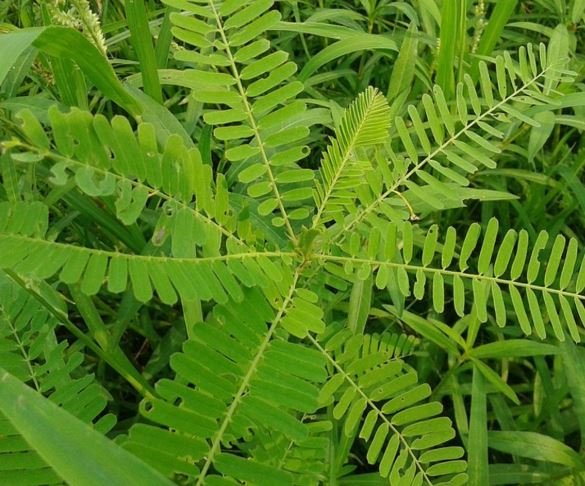
Dhaincha Farming Guide. In the modern era of farming, we often find ourselves trapped in a cycle of increasing chemical fertilizer use and decreasing soil fertility. If your land feels “tired,” if the soil is hardening, or if your urea costs are eating into your profits, there is a traditional solution that modern science now fully backs: Dhaincha (Scientific Name: Sesbania bispinosa) Family :Fabaceae .Common Name: Dhaincha, Prickly Sesban, Jantar.
Commonly known as the king of green manure, Dhaincha is more than just a crop; it is a biological factory that manufactures nitrogen and organic matter right in your field. In this guide, we will explore why every farmer should integrate Dhaincha into their crop rotation to ensure sustainable, high-yield harvests.
1. What is Dhaincha?
Dhaincha is a fast-growing, leguminous plant that thrives in various climates, particularly in India. It is primarily grown not for harvest, but to be “plowed back” into the soil.
Dhaincha Called in Telugu: జీలుగ (Jeeluga)
Dhaincha Called in Hindi: ढैंचा (Dhaincha)
For a farmer, Dhaincha acts as:
- A Nitrogen Generator: It pulls nitrogen from the air and fixes it in the soil.
- A Soil Conditioner: It breaks up hard soil layers with its deep roots.
- A Weed Suppressor: Its rapid growth leaves no room for harmful weeds.
2. The Magic of Nitrogen Fixation
As a farmer, your biggest expense is often nitrogen-based fertilizers like Urea. What if you could grow your own nitrogen?
Dhaincha belongs to the legume family. On its roots, you will find small bumps called nodules. These nodules house beneficial bacteria (Rhizobium) that take nitrogen from the atmosphere and convert it into a form that plants can eat.
The Math for Farmers:
On average, one acre of Dhaincha farming, when incorporated at the right time, can add approximately 60 to 80 kg of Nitrogen to the soil. This can allow you to reduce your chemical urea application by 25% to 50% in the following crop (like Rice or Wheat).
3. Reclaiming “Bad” Land: Salinity and Alkalinity
One of the unique superpowers of Dhaincha is its ability to grow in “Usar” or “Kallar” (saline/alkaline) soils where other crops fail.
- Acidification: As Dhaincha decomposes, it releases mild organic acids that help neutralize alkaline soil.
- Deep Rooting: Its roots penetrate deep, creating “pores” in the soil. This allows rainwater to wash away excess salts from the surface, effectively cleaning your land for the next main crop.
4. How to Cultivate Dhaincha: Step-by-Step
To get the best results for your soil, follow this cultivation schedule:
A. The Best Time to Sow
The ideal window is April to June, immediately after the Rabi harvest and before the Kharif (Monsoon) sowing. This “gap” period is perfect because Dhaincha needs heat and a little moisture to explode in growth.
B. Seed Rate and Sowing
- Dhaincha Seed Quantity (Seed Rate: Use 12 to 15 kg of seed per acre.
- Preparation: A single plowing is usually enough. Broadcast the seeds and cover them lightly with a plank (Patela).
- Pro-Tip: Soak seeds in water for 8–12 hours before sowing to ensure 100% germination.
C. Water Management
Dhaincha is incredibly “drought-tolerant.” Usually, 2 to 3 irrigations are enough. If it rains during the pre-monsoon, you may not need to irrigate at all.
5. The “Golden Rule”: When to Plough it In?
The most common mistake farmers make is waiting too long to plow the Dhaincha back into the earth.
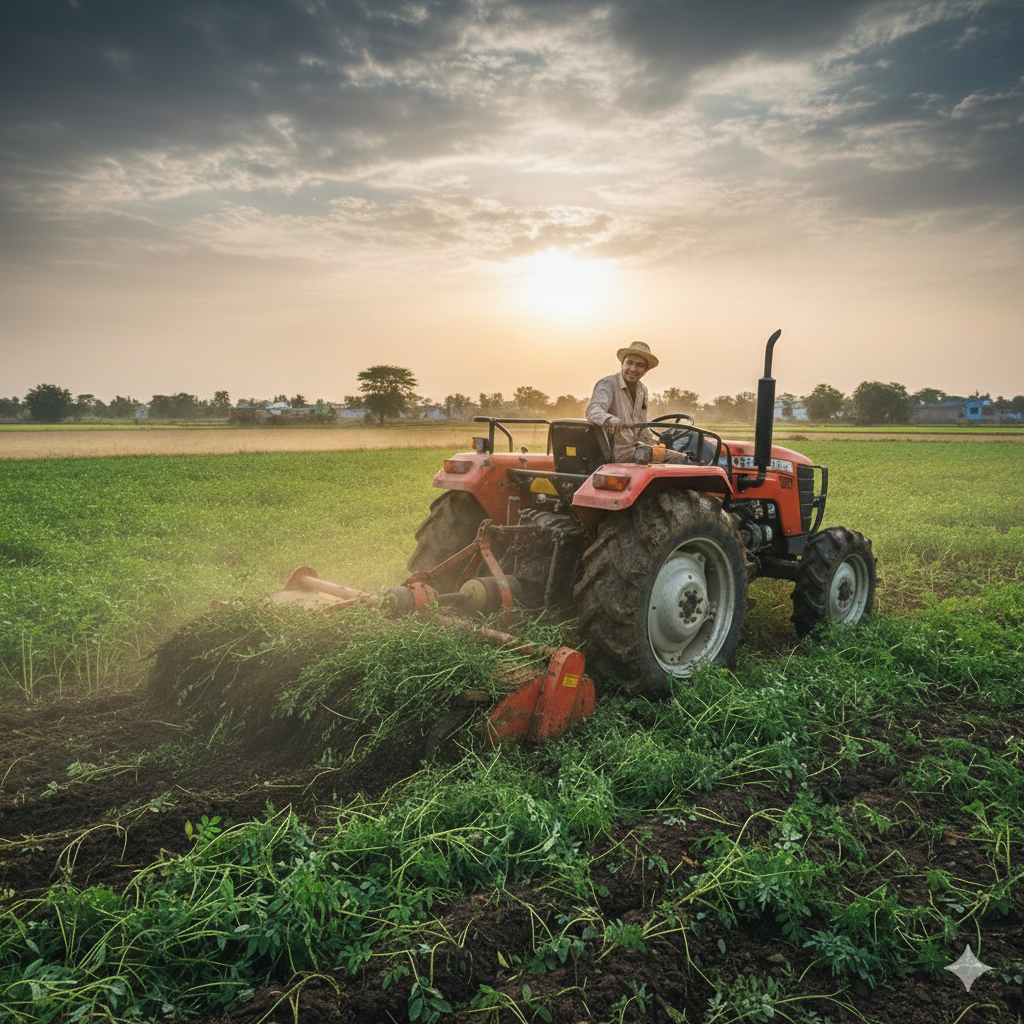
The Rule: Incorporate the crop when it is 45 to 50 days old, or just as it begins to flower.
- Why? At this stage, the plant is “succulent” (juicy and soft). It decomposes rapidly. If you wait until the stems become woody (brown and hard), it will take too long to rot, and it might even steal nitrogen from your next crop to help the decomposition process.
- How? Use a Rotavator or a disc harrow to crush the standing crop and mix it thoroughly into the mud. Maintain 2–3 inches of standing water in the field for 7 days after plowing to speed up the rotting process.
6. Economic Benefits: Why Your Wallet Will Thank You
Farming is a business, and Dhaincha is a high-return investment.
| Feature | Chemical Fertilizer Only | With Dhaincha Green Manure |
| Soil Texture | Becomes hard/compact over time | Stays soft and easy to plow |
| Fertilizer Cost | 100% Cost | 30% Savings on Nitrogen |
| Water Retention | Low (needs frequent watering) | High (organic matter holds water) |
| Yield Quality | Standard | Higher grain weight and shine |
7. Secondary Uses for the Farm
While its main job is manure, Dhaincha offers other benefits:
- Cattle Feed: Young Dhaincha leaves are rich in protein and can be fed to goats and cows.
- Windbreaks: Planted on the edges of your field, it protects delicate crops from hot summer winds (Loo).
- Fencing: Its tall, dense growth acts as a natural barrier against stray animals.
8. Summary for the Busy Farmer
If you want to save money and save your soil, remember these three things:
- Sow Dhaincha in the summer gap (May/June).
- Plow it back into the soil at 45–50 days (before the stems get hard).
- Reduce your next crop’s Urea application significantly.
Sustainable farming isn’t about going back to the past; it’s about using the best of nature to build a profitable future. By growing Dhaincha, you are not just planting a crop—you are feeding the very earth that feeds you.
For a farmer, the most important part of using Dhaincha is knowing exactly how much money and fertilizer can be saved. Based on agricultural research and field trials, here is a breakdown of how you can adjust your fertilizer application for the subsequent crop (like Rice or Maize).
Fertilizer Reduction Chart: Dhaincha Green Manuring
When you incorporate 45-60 day old Dhaincha into your field, you are essentially pre-loading the soil with nutrients. Use the table below to adjust your chemical fertilizer bags.
| Nutrient Type | Standard Dose (Without Dhaincha) | New Dose (After Dhaincha) | Potential Savings |
| Nitrogen (Urea) | 100% (Full Dose) | 50% – 75% | 25% to 50% Reduction |
| Phosphorus (DAP/SSP) | 100% (Full Dose) | 75% – 80% | 20% to 25% Reduction |
| Potassium (MOP) | 100% (Full Dose) | 90% | 10% Reduction |
| Organic Matter | Minimal | High | N/A (Soil Health Bonus) |
Understanding the Savings:
- Nitrogen (The Urea Saver): Dhaincha is a nitrogen specialist. A healthy 50-day-old crop can add between 60kg to 100kg of Nitrogen per hectare. This means if you usually apply 4 bags of Urea, you can often get the same (or better) results with only 2 to 3 bags.
- Phosphorus (The DAP Factor): Dhaincha roots are excellent at “scavenging.” They pull phosphorus from deep soil layers and bring it to the surface. When the plant rots, this phosphorus becomes “available” for your next crop, allowing you to cut back on DAP.
- Micronutrients: Beyond NPK, Dhaincha adds Zinc, Iron, and Manganese back into the soil, which are often missing in fields that only use chemical fertilizers.
Practical Tips for Maximum Reduction:
- The 2nd Split Rule: Do not reduce the basal (initial) dose of fertilizer completely. Instead, reduce the second or third top-dressing of Urea. Since Dhaincha releases its nitrogen slowly over 30-40 days, your crop will have a steady supply exactly when it needs it most.
- Decomposition Time: Ensure you give the Dhaincha 7 to 10 days to rot in standing water before transplanting your main crop. This ensures the “green energy” is fully converted into plant food.
Read More
Also Read
- Digital India: Identify Your Land Survey Number Instantly Using Your Smartphone
- AI in Farming: How Indian Farmers Are Transforming Agriculture
- Best Winter Crops for Export From India
- Dhaincha Farming Guide: Save 50% on Urea & Improve Soil Health
- Fertilizer Booking App Guide: How to Book Urea Online


