Most Profitable Crops for Small Farms in India
If you are a small farmer or an agri-entrepreneur looking to maximize returns from limited acreage, the old rulebook no longer applies. The “Grain to Gourmet” shift is real. Today’s consumer in Mumbai, Bangalore, or Delhi isn’t just buying food; they are buying health, immunity, and exotic experiences.
This guide explores the most profitable crops for small farms in 2025, backed by current market trends, government support, and the rising demand for high-value produce.
1. The 2025 Shift: Why High-Value Agriculture is Winning
For decades, the Indian small farmer (owning less than 2 hectares) was trapped in the cycle of low-value cereal crops. However, 2025 has solidified a new trend: Crop Diversification for Profitability.
Why is this happening now?
- Changing Plate Politics: The post-pandemic consumer is hyper-aware of immunity. Demand for “residue-free” and nutrient-dense foods has surged by over 40% in urban centers.
- Shrinking Land, Growing Vertical: With land fragmentation, farmers cannot rely on volume. They must rely on value per square foot.
- Export Potential: India is now a key exporter of herbal extracts and exotic fruits to the Middle East and Europe, opening doors for smallholders to tap into global supply chains.
Key Insight: The secret to profitability in 2025 isn’t growing more; it’s growing what the market craves.
2. Category 1: The “Superfood” Fruit Revolution
Fruit farming was once considered a long game, but specific varieties are now offering faster ROI and massive returns per acre.
Dragon Fruit (Kamalam)
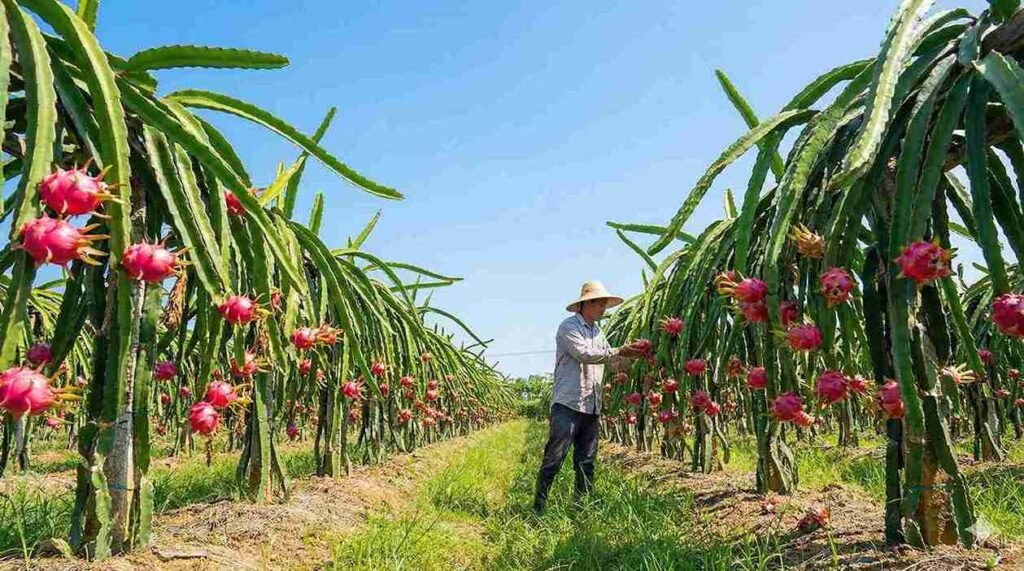
Once an imported luxury, Dragon Fruit is now the darling of Indian horticulture.
- Why it pays: It is low maintenance, drought-resistant, and commands a premium price in the market (₹80–₹150 per kg).
- The Economics: A single acre can accommodate roughly 1,700–2,000 poles (using the trellis system). By the third year, yields can hit 10–12 tonnes per acre.
- 2025 Outlook: With the Gujarat and Maharashtra governments aggressively promoting “Kamalam,” subsidies for the expensive pole-and-wire infrastructure are widely available.
Avocado (Butter Fruit)
The “Guacamole generation” has arrived in Tier-1 cities.
- Why it pays: Domestic production is still catching up to demand, keeping prices high (₹200–₹400 per kg).
- Best Regions: Western Ghats (Coorg, Wayanad), Tamil Nadu (Kodaikanal), and parts of Sikkim.
- Strategy: For small farmers, intercropping avocados with coffee or pepper ensures income while the trees mature.
3. Category 2: Medicinal & Aromatic Plants (The Wellness Wave)
If you have poor soil or water scarcity, this is your goldmine. The global herbal medicine market is booming, and India is its engine.
Ashwagandha (Indian Ginseng)
- The Demand: As stress levels rise globally, so does the demand for Ashwagandha roots. It is a major export commodity to the US and Europe.
- Profitability: It is a short-duration crop (150-170 days).
- Economics: Cost of cultivation is low (approx. ₹15,000–₹20,000 per acre), while net returns can range from ₹1.5 Lakh to ₹2.5 Lakh per acre depending on the alkaloid content of the root.
Shatavari & Aloe Vera
- Shatavari: High demand in the pharmaceutical industry for women’s health tonics. It is a hardy crop that requires minimal pesticides.
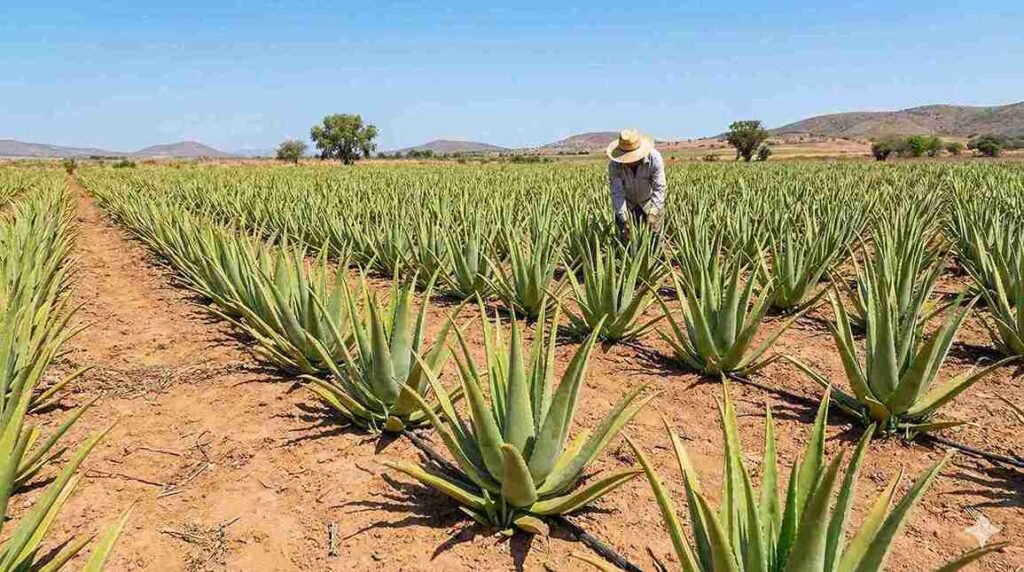
- Aloe Vera: The cosmetic industry can’t get enough. Contract farming with Ayurveda giants (like Patanjali or Dabur) offers small farmers price security.
Pro Tip: Focus on contract farming for medicinal plants. Securing a buy-back agreement before you sow ensures you aren’t left hunting for buyers at harvest time.
4. Category 3: Exotic Vegetables & Hydroponics
Urbanization has created a market for “English vegetables” that were previously only found in 5-star hotels.
Broccoli, Lettuce, and Zucchini
- Market: These crops sell at a 300-400% premium over traditional vegetables like cauliflower or pumpkin.
- Short Cycle: Most of these can be harvested within 60-70 days, allowing for 3-4 crop cycles a year.
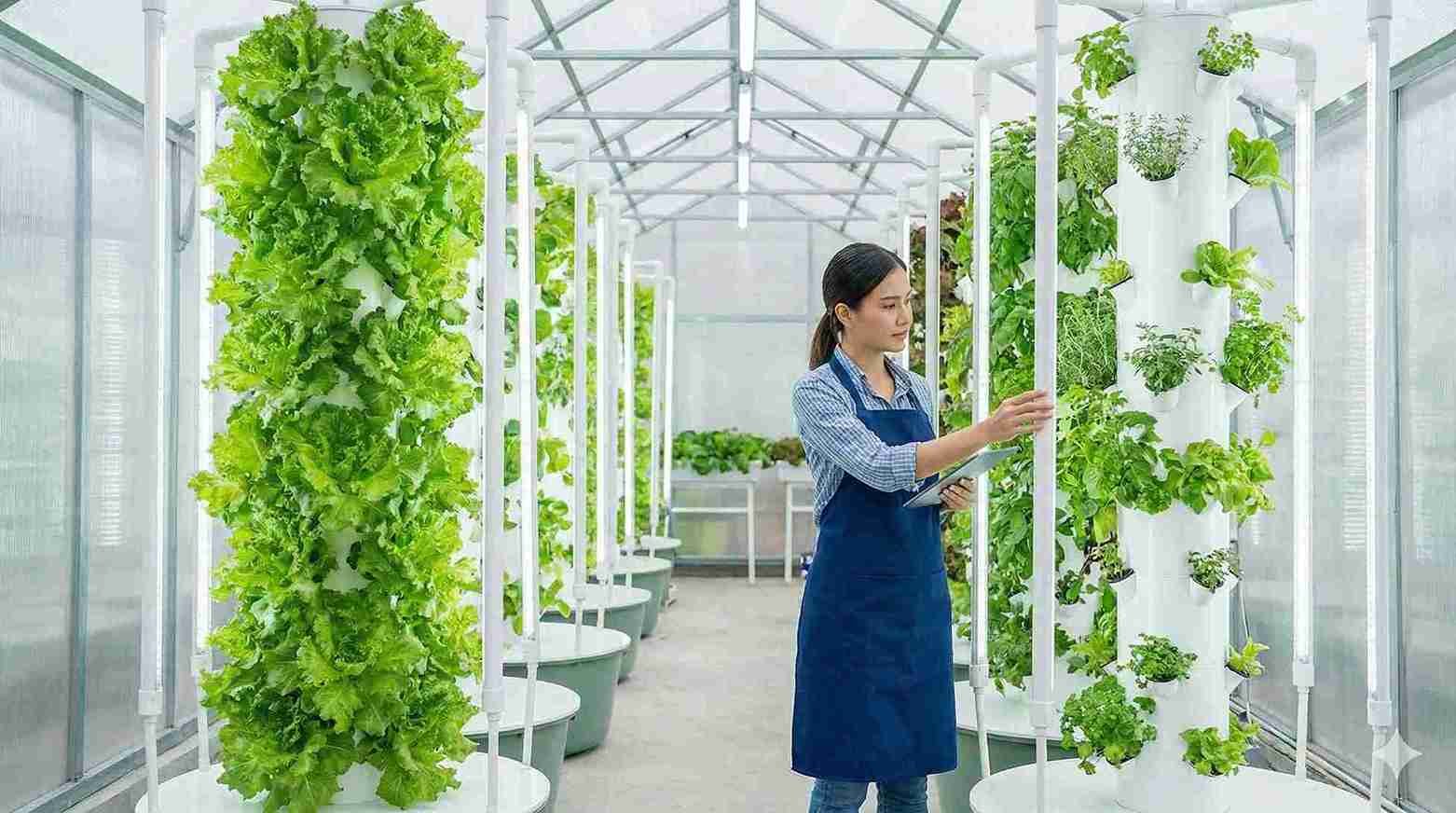
- The Hydroponic Edge: For farmers with very little land (even 500 sq yards), setting up a polyhouse for hydroponic lettuce or cherry tomatoes is one of the most profitable crops for small farms 2025 offers. You can control the environment, eliminate soil-borne diseases, and sell “residue-free” produce directly to urban housing societies.
5. Category 4: “Black Gold” Spices
Spices are low-volume but extremely high-value.
Black Turmeric (Kali Haldi)
Unlike common yellow turmeric, the black variety is rare and used in niche medicinal and tantric practices.
- Price: While yellow turmeric sells for ₹60-100/kg (raw), Black Turmeric can fetch anywhere from ₹500 to ₹1,500 per kg.
- Cultivation: It requires similar conditions to normal turmeric but needs a secured buyer due to its niche market.
Saffron (Indoor/Aeroponic)
Traditionally limited to Kashmir, technology has broken this barrier.
- Innovation: In 2025, indoor “Aeroponic Saffron” farming is gaining traction in states like Noida and Bangalore.
- The Math: By simulating the chilly Pampore climate in a shipping container, farmers are harvesting “Red Gold” that sells for ₹2.5 Lakh+ per kg. It is capital intensive to set up, but the returns are unmatched.
6. The Silent Earner: Mushroom Cultivation
Mushrooms are arguably the best entry point for landless farmers or those with very small plots.
- Button Mushrooms: High demand in retail/catering.
- Oyster Mushrooms: Easiest to grow, low investment.
- Cordyceps Militaris: The new superstar. This medicinal mushroom is grown in jars in controlled labs and sells for over ₹1 Lakh per kg (dried).
- Efficiency: You don’t measure mushroom farming in acres; you measure it in square feet. A 20×20 ft room can generate a monthly income rivaling a corporate salary if managed well.
7. Smart Tech for Small Plots: Vertical Farming & Precision Tools
To make the most profitable crops for small farms 2025 work, you need to modernize.
- Vertical Farming: Growing upwards using stacked layers. This increases the effective growing area by 3x to 5x. Ideal for leafy greens and strawberries.
- Drip Irrigation with Fertigation: Delivering nutrients directly to the root zone reduces water usage by 70% and fertilizer costs by 30%.
- Drone Spraying: Renting agricultural drones for spraying micronutrients is becoming affordable and saves days of manual labor.
8. Government Schemes & Market Access in 2025
You are not alone in this journey. The government is actively supporting diversification.
Key Schemes to Know:
- Mission for Integrated Development of Horticulture (MIDH): Offers subsidies for setting up polyhouses, drip irrigation, and planting material for high-value crops like Dragon Fruit.
- PM-FME (Formalization of Micro Food Processing Enterprises): If you decide to process your turmeric into powder or make Aloe Vera juice, this scheme provides financial, technical, and business support.
- e-NAM (National Agriculture Market): Connects you digitally to buyers across India, ensuring you aren’t exploited by local middlemen.
Marketing Strategy: The “Farm-to-Fork” Model
Small farmers maximize profit by removing the middleman.
- WhatsApp Business: Create broadcast lists for local housing societies.
- Community Supported Agriculture (CSA): Get families to “subscribe” to your farm for a weekly box of fresh, seasonal vegetables.
9. Conclusion
The year 2025 is a watershed moment for Indian agriculture. The definition of a “farmer” is evolving from a mere producer to a smart agri-preneur.
Whether you choose the exotic allure of Dragon Fruit, the steady demand of Medicinal Plants, or the tech-savvy route of Hydroponics, the key ingredients for success remain the same: Market Research, Quality Consistency, and Value Addition.
The soil is ready. The market is waiting. The question is, are you ready to plant the seeds of profit?
Frequently Asked Questions (FAQs)
Q1: Which crop gives the highest return per acre in India?
Q2: Can I do profitable farming on 1 acre of land?
Q3: Is mushroom farming profitable in India?
Cost-Benefit Analysis (CBA)
Here is a detailed Cost-Benefit Analysis (CBA) for two of the most distinct crop models mentioned: Dragon Fruit (High Investment, Long-Term Wealth) and Ashwagandha (Low Investment, Quick Cash).
This comparison will help you decide based on your available capital and patience.
Option A: The “Wealth Builder” Model (Dragon Fruit)
Best for: Farmers with capital to invest who want passive income for 20+ years.
Land Required: 1 Acre (Standard Unit)
Projected Lifespan: 20–25 Years
1. Initial Investment (One-Time Cost)
Note: Costs are estimates for 2025 based on current market rates for the “Trellis/Pole” system.
| Component | Quantity/Description | Estimated Cost (₹) |
| Infrastructure (Poles) | 500 Concrete Poles (₹500/pole avg) | ₹2,50,000 |
| Planting Material | 2,000 Saplings (4 per pole @ ₹60/sapling) | ₹1,20,000 |
| Drip Irrigation | Inline drip system (Subsidies available) | ₹40,000 |
| Land Preparation | Ploughing, Pitting, Manure, Labor | ₹50,000 |
| Fencing | Essential for protection | ₹40,000 |
| Total Initial Capital | ₹5,00,000 |
2. Operational Costs (Recurring Annual)
| Component | Description | Annual Cost (₹) |
| Fertilizers | Organic manure & micronutrients | ₹30,000 |
| Labor | Pruning, weeding, harvesting | ₹40,000 |
| Misc | Maintenance, power, transport | ₹10,000 |
| Total Annual Cost | ₹80,000 |
3. Profitability Timeline (Per Acre)
| Year | Expected Yield | Approx. Price | Gross Income | Net Profit |
| Year 1 | Negligible | – | – | (-₹5,80,000) (Loss) |
| Year 2 | 3–4 Tonnes | ₹80–100/kg | ₹3,00,000 | ₹2,20,000 |
| Year 3 (Mature) | 8–10 Tonnes | ₹80–100/kg | ₹8,00,000 | ₹7,20,000 |
| Year 4+ | 10–12 Tonnes | ₹80/kg | ₹9,50,000 | ₹8,70,000 |
Verdict: You break even by Year 3. From Year 4 onwards, it is essentially an “ATM” generating ₹8 Lakhs+ profit annually with minimal labor.
Option B: The “Quick Cash” Model (Ashwagandha)
Best for: Farmers with low capital, water scarcity, or short-term land leases.
Duration: 160–180 Days (6 Months)
1. Cost of Cultivation (Per Acre)
Note: Ashwagandha is a low-input crop.
| Component | Description | Estimated Cost (₹) |
| Seed Cost | 5 kg @ ₹500/kg (High-quality variety) | ₹2,500 |
| Land Prep | Ploughing & Bed preparation | ₹4,000 |
| Fertilizers | FYM (Farm Yard Manure) & Bio-fertilizers | ₹5,000 |
| Weeding/Labor | Manual weeding is crucial (2 rounds) | ₹6,000 |
| Harvesting | Digging roots, washing, cutting | ₹5,000 |
| Total Cost | ₹22,500 |
2. Returns & Profitability (Per Cycle)
Ashwagandha offers dual income: Dry Roots (Main product) and Seeds.
| Component | Yield | Market Price (2025 Est.) | Income (₹) |
| Dry Roots | 3–4 Quintals (300-400 kg) | ₹250–₹350 per kg | ₹1,00,000 (avg) |
| Seeds | 50 kg | ₹150 per kg | ₹7,500 |
| Total Gross Income | ₹1,07,500 |
3. Final Tally
- Total Investment: ₹22,500
- Total Income: ₹1,07,500
- Net Profit: ₹85,000 per acre (in 6 months)
Verdict: While the absolute amount is lower than Dragon Fruit, the Return on Investment (ROI) is massive (nearly 400%). You can do two cycles a year or rotate with another crop, potentially earning ₹1.7 Lakhs/acre annually with very little risk.
Comparative Summary
| Feature | Dragon Fruit | Ashwagandha |
| Risk Level | Medium (High initial capital) | Low (Minimal capital lost if crop fails) |
| Water Need | Moderate (Drip essential) | Very Low (Drought resistant) |
| Wait Time | 2-3 Years for Profit | 6 Months for Profit |
| Ideal For | Landowners looking for long-term wealth | Leaseholders or new farmers |
Major Market Buyers
Wholesale Buyers (Spot Market/Mandi)
If you already have a crop or don’t want a contract, these are the major trading hubs where buyers congregate.
- Neemuch Mandi (Madhya Pradesh): The “Wall Street” of medicinal herbs in India. Major traders include A.R. Herbs, Adinath Trading Co., and Darak Traders.
- Jaipur (Rajasthan): Key buyers include Green India and Som Sanjeevani.
- Ahmedabad (Gujarat): Young Chemist Pvt Ltd and Marudhar Impex are large-scale buyers of dry roots.
Dragon Fruit: Contract Partners & Buyback
Best for: Maharashtra, Gujarat, Telangana, Karnataka
Dragon fruit contracts are slightly different—companies usually sell you the Trellis system and Saplings and sign a buyback agreement for the fruit 2-3 years later.
A. Contract Farming & Consultancy Partners
B. Government Support & Export Clusters (2025)
- Maharashtra: Look into the “Bhausaheb Fundkar Phalbaag Lagvad Yojana” which provides subsidies for orchard planting.
- Exporters: Many dragon fruit farmers in Solapur (MH) and Kutch (GJ) are now forming FPOs to export directly to the Middle East (Dubai/UAE). Joining a local FPO is often safer than a private contract.
Actionable Steps to “Line Up” a Buyer
- The “Sample” Test: Before signing a contract, ask the company: “Can you give me the phone numbers of 3 farmers in my district who sold their crop to you last year?” If they refuse, walk away.
- Visit the Mandi: For Ashwagandha, a trip to Neemuch Mandi (MP) is worth the investment. You can meet 10-20 traders in one day and get their visiting cards.
- Join an FPO: Search for “Medicinal Plant FPO” or “Horticulture FPO” in your district on the e-NAM (National Agriculture Market) portal. Selling through an FPO often guarantees a better price than selling alone.
Here are the direct contact details and websites for the companies and market hubs mentioned.
Critical Safety Warning:
- Never pay a deposit solely based on a phone call.
- Visit the farm/office in person before signing any agreement.
- Check the Mou (Memorandum of Understanding): Ensure the “Buyback Price” is clearly written (e.g., “₹300/kg” is better than “Market Rate”).
 Critical Safety Warning:
1. Ashwagandha & Medicinal Plants (Contractors & Buyers)
A. North & Central India (Rajasthan / Madhya Pradesh)
| Company Name | Location | Contact Details |
| Amritanjali Ayurved | Udaipur, Rajasthan | Website: amritanjaliayurved.in Phone: +91-97999 31200 / +91-85293 88815 Note: Major player for Stevia and Ashwagandha. |
| Maatitatva Agro Industries | Indore, MP | Website: maatitatva.com Address: 622, Scheme No. 114, Part 2, Indore. Email: maatitatvagro@gmail.com |
| A.R. Herbs (Trader) | Neemuch Mandi, MP | Address: 01, Raj Colony, Opp. Krishi Upaj Mandi, Neemuch. Phone: +91-99070 00033 (Verify locally) Note: Neemuch is India’s largest medicinal herb market. Visiting here is better than calling. |
B. West & South India (Gujarat / Karnataka)
| Company Name | Location | Contact Details |
| NandiRaj Producer Co. | Jalore / Ahmedabad | Website: nandirajfpo.com Phone: +91-80427 56822 Note: A Farmer Producer Company (FPO), generally safer for small farmers. |
| Sami-Sabinsa Group | Bangalore, Karnataka | Website: sami-sabinsagroup.com Phone: +91-80-6852 7777 Note: Large corporate exporter. Contact their “Contract Farming Division” specifically. |
2. Dragon Fruit (Saplings + Buyback)
Dragon fruit contracts usually involve buying their “Elite” saplings to get the buyback guarantee.
| Company Name | Location | Contact Details |
| Deccan Exotics | Hyderabad, Telangana | Website: deccanexotics.com Phone: +91-73311 55778 Note: Highly reputed for research and training. |
| Gujarat Dragon Fruit Farm | Jamnagar, Gujarat | Website: gujaratdragonfruit.vercel.app Phone: +91-97269 80221 Note: They process fruit into jams/jellies, hence the buyback demand. |
| Visual Organic Agrotech | Thane, Maharashtra | Website: visualagrotech.in Phone: +91-87670 60104 |
| Shreem Biotech | Chhindwara, MP | Website: shreembiotech.com Phone: +91-79740 25433 Note: Large tissue culture supplier. |
3. Smart Agri-Tech Platforms (App-Based Connections)
If you want to find buyers without a contract, these platforms connect you to traders directly.
- Krikso: krikso.co.in – Connects farmers with input suppliers and buyers.
- e-NAM (Govt of India): enam.gov.in – Register here to see live prices at Neemuch or Azadpur Mandi.
Next Steps for You
- Select 2 companies from the list above that are closest to your state.
- Call them tomorrow between 10 AM and 4 PM.
- Ask this specific question: “Do you have a buyback agreement available for the 2025 planting season, and can I visit your demo farm this Saturday?”
Read More