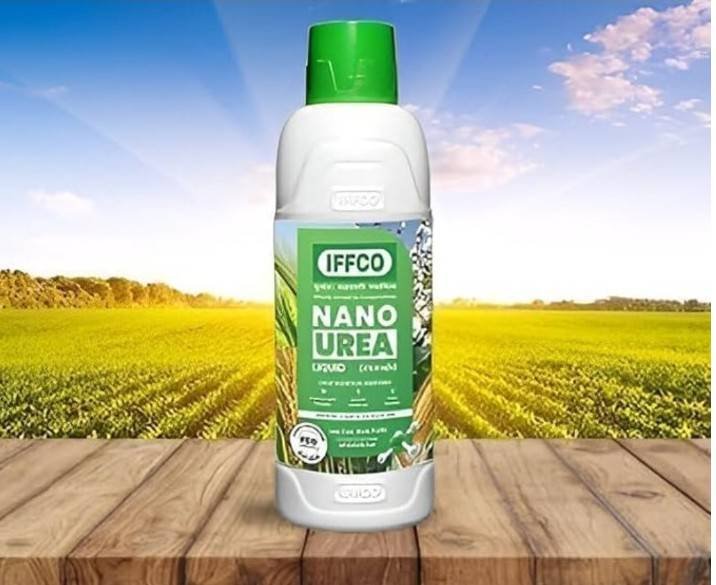
Nano Urea: Your Complete Guide to the Future of Nitrogen Fertilizer
Nano Urea: Your Complete Guide to the Future of Nitrogen Fertilizer .Hello, fellow innovators in the field! As an agriculture graduate with a background spanning BSc Agriculture and a Masters in Agriculture MBA, I’ve spent years analyzing the cutting edge of farming technology. Today, I’m thrilled to discuss a true game-changer that embodies the spirit of sustainable agriculture: nano urea. It’s not just a new fertilizer; it’s a paradigm shift in how we manage crop nutrition, offering a smarter, incredibly efficient, and environmentally responsible alternative to the traditional urea we’ve depended on for decades.
This comprehensive guide will break down the science, compare it to its conventional counterpart, and provide a clear-eyed view of its on-farm practicality. Let’s delve into the world of nano urea and see why it’s hailed as the fertilizer of the future.
1. The Science: What Exactly Is Nano Urea?
Simply put, nano urea is a liquid fertilizer that leverages the power of nanotechnology to deliver nitrogen directly to plants. Unlike conventional urea, which is distributed as white granular prills, nano urea is an aqueous (liquid) solution containing incredibly tiny particles—ranging from about 20-50 nanometers in size.
To appreciate the scale, imagine this: a single nano urea particle is over 55,000 times smaller than a standard urea prill! This microscopic size is its revolutionary advantage. When applied as a foliar spray on plant leaves, these minute particles can easily pass through the stomata (the plant’s pores) and other natural openings. Once inside the leaf, the nitrogen is absorbed and efficiently utilized by the plant’s cells, providing a direct, rapid, and highly effective nutrient supply. This targeted delivery mechanism is the secret behind its remarkable performance.
2. Why Nano Urea is a Revolutionary Leap Forward
The primary challenge with conventional urea is its woefully low utilization rate. For years, we’ve applied granular urea to the soil, only to lose massive amounts of nitrogen. Factors like volatilization (nitrogen turning into gas and escaping into the atmosphere), leaching (washing away with irrigation or rain), and runoff mean that a substantial portion—often 50% to 70%—of the fertilizer never reaches the plant’s roots. This is economically inefficient and a major contributor to environmental pollution, including groundwater contamination and the release of potent greenhouse gases.
Nano urea, as a foliar spray, completely bypasses this soil-based inefficiency. By coating the leaves, it offers a staggering Nitrogen Use Efficiency (NUE) of over 80%. This massive jump compared to the 30-50% efficiency of conventional urea means significantly more nitrogen is invested in crop growth, and dramatically less is wasted. This improved NUE is foundational to building a more sustainable agriculture system.
3. Practical and Economic Comparison: Nano Urea vs. Conventional Urea
For farmers, the bottom line is cost and convenience. While the scientific benefits are clear, the practicality on the ground determines adoption.
Cost and Equivalence
The current cost structure makes a compelling argument for nano urea:
- A 500 ml bottle of nano urea is generally priced around ₹225 (price may vary).
- This single bottle is touted to provide the nitrogen equivalent of a 45 kg bag of conventional urea, which costs roughly ₹242 (at subsidized rates).
On a material-to-material basis, nano urea appears comparable or even marginally cheaper. However, the true cost of adoption must account for application.
Application and Labor Costs
This is where the practical challenge lies. While the product is a logistical dream (a small 500 ml bottle versus a heavy 45 kg bag!), it requires a different application method. Nano urea necessitates specific foliar spray equipment and, critically, often more labor hours for repeated application across critical crop growth stages. For large-scale operations, the cumulative cost of machinery, fuel, and labor for multiple spray rounds can, in some cases, make the overall operational expenditure for using nano urea higher than that of simple, one-time granular application. This is a vital factor in farm-level decision-making.
4. The Balance Sheet: Pros and Cons of Using Nano Urea
The adoption of nano urea represents a vital step toward precision farming. However, like any new technology, it comes with a unique set of benefits and challenges.
Pros: The Promise of Precision
- Superior Nitrogen Use Efficiency (NUE): This is the core benefit. Higher efficiency means lower overall nitrogen input is required for the same or better result, saving costs and resources.
- Increased Crop Productivity: Field trials consistently show that the improved nitrogen availability can lead to an increase in crop yield and enhanced food quality, driving better returns.
- Logistical Superiority: The 500 ml bottle is drastically easier to handle, transport, and store than bulky 45 kg bags, significantly easing farm-level logistics.
- Environmental Stewardship: By minimizing nitrogen loss to the atmosphere and water bodies, nano urea is key to a truly sustainable agriculture. It reduces the environmental footprint associated with agriculture, including the emission of nitrous oxide ($\text{N}_2\text{O}$), a powerful greenhouse gas.
- Fiscal Relief: Widespread adoption can substantially reduce the government’s hefty subsidy burden on conventional urea, freeing up funds for other agricultural development initiatives.
Cons: Challenges and Considerations
- Application-Related Costs: The requirement for specialized sprayers and higher labor investment for repeated foliar spray application can increase the total cost of production.
- Mixed Efficacy Reports: While research is overwhelmingly positive, some farmers and regional studies have reported mixed or slightly reduced effectiveness compared to well-timed granular application, suggesting localized testing is crucial.
- Not a Complete Replacement: Nano urea is primarily a supplement. It is designed to maximize the utilization of nitrogen during the critical growth phases and is not meant to completely substitute the basal fertilizer (like DAP) needed for initial crop establishment. Farmers must understand the need for a balanced nutrient plan.
- Skill and Timing Dependent: Optimal results demand precise timing—spraying during specific, critical growth stages—and correct dilution. Incorrect timing or poor application technique can lead to issues like leaf burn and reduced effectiveness.
5. Driving Sustainable Agriculture Forward
Nano urea is more than just a chemical; it’s a critical component of the future. It encourages a necessary and responsible shift from indiscriminate, soil-based broadcasting to targeted, need-based foliar spray application. While the industry continues to refine its deployment strategies and overcome the logistical hurdles of high-labor input, its potential to drastically boost crop productivity while safeguarding our environment is undeniable.
The journey toward a completely sustainable agriculture system is complex, but with innovations like nano urea, we are moving in the right direction. It reminds us that sometimes, the most revolutionary solutions are those delivered in the smallest packages.
Frequently Asked Questions (FAQs) About Nano Urea
Q1: What is the key difference between Nano Urea and Conventional Urea?
A: The primary difference lies in particle size and application method. Conventional urea is a granular solid applied to the soil, leading to significant nitrogen loss (low Nitrogen Use Efficiency or NUE). Nano urea is a liquid containing particles 20-50 nanometers wide, applied as a foliar spray directly onto the leaves, resulting in an NUE of over 80%.
Q2: Can Nano Urea completely replace the need for traditional granular urea application?
A: Not entirely. Nano urea is primarily designed to supplement nitrogen needs during the plant’s critical growth stages via a foliar spray. It should not entirely replace the initial basal fertilizer application (like DAP or conventional urea applied at sowing) required for early root development and overall crop establishment. It optimizes the remaining nitrogen requirement.
Q3: What are the main environmental benefits of switching to Nano Urea?
A: The main benefit stems from drastically reduced nitrogen loss. By minimizing nitrogen leaching into groundwater and volatilization into the atmosphere, nano urea significantly lowers soil, water, and air pollution. This directly contributes to a more sustainable agriculture model.
Q4: If Nano Urea is cheaper per unit of nitrogen, why might the overall application cost be higher for a farmer?
A: While the raw material cost is comparable or slightly lower, the overall cost is influenced by application logistics. Nano urea requires multiple foliar spray applications at specific times, which incurs costs related to specialized spraying equipment, labor, fuel, and timely execution, which can sometimes exceed the cost of a single basal application of conventional urea.
Q5: What is the ideal way to apply Nano Urea for best results?
A: Nano urea must be applied as a foliar spray at critical growth stages as recommended by the manufacturer or agricultural experts. Proper dilution and ensuring good leaf coverage without causing leaf burn are crucial for achieving the high Nitrogen Use Efficiency touted for this product.
Q6: Is Nano Urea suitable for all crops?
A: While it has shown promise across a wide range of crops—from cereals like wheat and rice to pulses and vegetables—the specific timing and dosage required for optimal results can vary based on the crop type, soil health, and local environmental conditions. Always verify dosage recommendations for your specific crop.
Read more
- How to Book Urea & Fertilizers in the Framework for Fertilizer Sale (FFS) App: Step-by-Step Guide
- Framework for Fertilizer Sale (FFS): Telangana’s New Centralized Fertilizer App
- Fertilizer Booking App: Mistakenly Entered Less Crop Area? Here’s What Farmers Need to Know
- Monsoon 2026: Best Crops for Farmers as IMD Predicts Weak Rainfall
- Digital India: Identify Your Land Survey Number Instantly Using Your Smartphone